


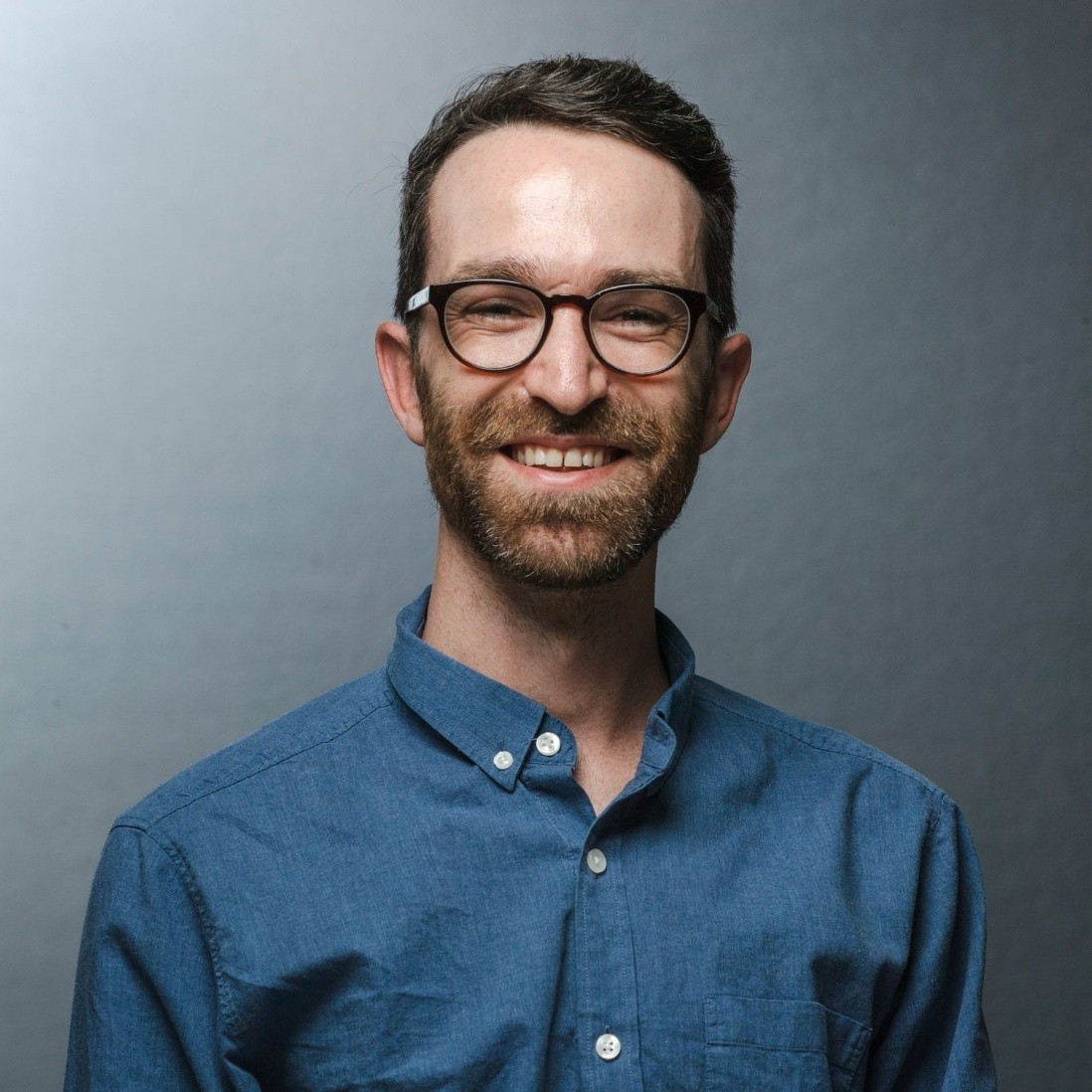
 Dr. Zachariah McLean
 Shepherding Scientific Discoveries
2024 HD Human Biology Fellow, Dr. Zachariah McLean, Massachusetts General Hospital
Written by Dr. Tam Maiuri
Edited by Dr. Kaitlyn Deschamps and Samantha Laville-Dupuy
Zachariah McLean’s path to Huntington’s disease (HD) research began in an unexpected place: with sheep. And it may help explain one of the field’s most important questions—why the same HD mutation can lead to symptoms decades apart.
During his PhD at the University of Auckland, Zach wanted to work with CRISPR and advanced gene-editing systems. In New Zealand, cell engineering often happens in agricultural science, so he found himself cloning cells and producing genetically engineered sheep. “That was pretty crazy,” he says. “That was also kind of a unique experience.”
One of his supervisors, Dr. Russell Snell, was part of the team that identified the huntingtin gene in 1993. Through that connection, Zach learned about the HD genetics groups at Massachusetts General Hospital, run by Drs. Jim Gusella and Marcy MacDonald. He reached out to Dr. Gusella about joining the lab and was thrilled when Jim accepted.
“The smartest person I know,” Zach says of Jim. “He’s always coming up with amazing ideas for experiments.”
Zach arrived at MGH with what he calls an “orthogonal” background, built sideways through agriculture and gene editing rather than through traditional HD research. “I can bring something new, hopefully,” he says.
The Thirty-Year Gap
HD families know that the disease doesn’t progress the same way for everyone. Two people can carry the same huntingtin mutation, and one might develop symptoms at 35 while the other doesn’t until 65. The mutation explains why the disease occurs, but not when the symptoms begin.
The Gusella and MacDonald labs have spent years trying to understand this difference in timing. Their work points toward genetic modifiers, which are other genes that can either speed up or slow down the appearance of symptoms. Zach’s research focuses on the mechanism behind those modifiers: not just that they influence disease, but what they are doing inside cells.
One key process affected by genetic modifiers, “somatic instability,” is the ongoing expansion of the CAG repeat in certain cells over a person’s lifetime. Those same cells are the ones that die in HD. If we can understand what is driving that expansion and how the genetic modifiers affect it, we could begin identifying new treatments.
As with many factors in HD, studying somatic instability in the lab is challenging. In people, expansion occurs over decades. To model it, researchers must engineer cells with unusually long repeats, pushing the system to an extreme until it behaves in a way that can be measured. Zach spent his PhD doing this type of cell engineering, but in sheep. Now, supported by the HDSA Human Biology Project, he has developed a cell model that finally allows researchers to study somatic instability directly.
His unconventional background turned out to have been the perfect fit. Jim’s lab is small, so most of Zach’s approximately thirty collaborators are spread across several other labs. Zach came in with skills each group needed. He collaborates closely with Dr. Vanessa Wheeler and Dr. Ricardo Mouro Pinto on somatic instability, and with Dr. Jong-Min Lee on human genetics.
Straight Resilience
The hardest part of the work, Zach says, is how much “just straight resilience and perseverance” it demands. You plan the best experiments you can, anticipate everything that could go wrong, and sometimes things still go wrong. “It puts you in a really uncomfortable position as a human,” he says. “Of uncertainty, not knowing what to do.”
But when things do work? “Oh my God, this is amazing,” Zach says. And that’s what keeps him going.
The genetic modifiers Zach’s lab is studying were identified through large-scale analyses of thousands of HD participants across multiple natural history studies, including Enroll-HD, the world’s largest HD registry. Those insights came from years of clinic visits: movement assessments, cognitive tests, and detailed records of how symptoms shift over time. Researchers have mined that data for information, and the discoveries now fueling a new wave of therapeutic development in somatic instability came from those visits. It’s interesting to think that the people who generated this data had no way of knowing whether their contribution would lead anywhere, but they kept showing up, with straight resilience.
Zach wants them to know their contribution was foundational. “For the human genetics, that is the foundation of where these insights are coming from,” he says. He encourages HD families to keep engaging with natural history studies, especially as those studies are increasingly integrated into clinical trial design. The next couple of years, he thinks, will be an exciting time, with therapeutics targeting somatic instability moving toward clinical trials.
The resilience Zach has built throughout his scientific career came full circle recently as he and his wife welcomed a new baby. This means a lot of time at the park and, he estimates, about twenty books a day, that aren’t even for him! All the years spent reading scientific papers have amply prepared him for this. They also foster cats. They take the senior cats nobody else has signed up for, and sometimes it takes a while to find out who they are. There was a big cat called Benjamin, beautiful but terrified. He spent a week under the bed, swiping at any hand that reached toward him, giving no sign of changing. When he finally came out, he was a different animal entirely. “He was very sweet,” Zach says. “He was just very scared.”
When Zach returns to New Zealand to launch his own lab, he’ll do so with a model that is already reshaping how scientists study HD. Breakthroughs don’t always follow the expected path. They come from people willing to sit with uncertainty long enough to build what wasn’t there before.
Zachariah McLean is an Instructor in Neurology at Massachusetts General Hospital and Harvard Medical School. His work is supported through the HDSA Human Biology Project. To learn more about Enroll-HD and how participation supports HD research, visit enroll-hd.org.